Tobacco tax reform: wiiw-HEPA highlights potential gains for budgets and public health to EU lawmakers
Our senior research associate, Dr Hana Ross, presented expert insights on the proposed revisions to the EU Tobacco Tax Directive at a high-level hearing in Brussels this November
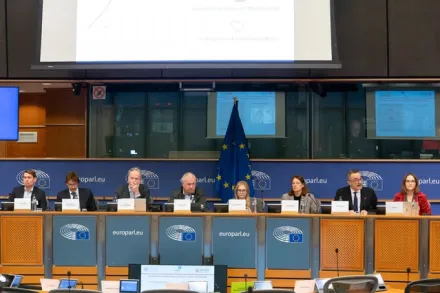
The European Parliament’s Subcommittee on Tax Matters (FISC) convened a public hearing on 20 November 2025 to assess potential reforms to the EU Tobacco Tax Directive (TTD). The European Commission had unveiled its proposal for revisions in July, arguing that the current framework — in place since 2014 — is no longer fit for purpose.
In recent years, rapid income growth and inflation – driven in part by the COVID-19 pandemic and the economic fallout from Russia’s full-scale invasion of Ukraine – have significantly eroded the Directive’s effectiveness. As cigarettes have become more affordable, the TTD’s ability to support public health goals and to create a level playing field within the EU’s internal market, has weakened. Although several member states have raised excise taxes unilaterally to shore up revenues and prevent backsliding on decades of progress in reducing smoking, experts have emphasised that coordinated EU-wide action would yield far greater fiscal and health benefits.
The hearing was chaired by FISC Vice-Chair Markus Ferber. Among the speakers was Dr Hana Ross, Senior Research Associate at wiiw, who joined Maria Elena Scoppio, Director for Indirect Taxation and Tax Administration at the European Commission’s Directorate-General for Taxation and Customs Union (DG TAXUD), as well as representatives from the tobacco industry and the health sector.

In her remarks, Dr Ross outlined three central considerations for policy makers.
First, she welcomed the Commission’s proposal to raise the minimum excise rate on combustible cigarettes from EUR 90 to EUR 215 per 1,000 sticks — a significant increase, with one third of the rate calibrated to national purchasing power. She argued that this adjustment is essential to restoring the TTD’s relevance in today’s economic environment.
Second, she drew attention to the preferential treatment of novel tobacco and nicotine products under current legislation. While the proposed revisions attempt to address regulatory gaps, Dr Ross warned that they still leave a large disparity in minimum excise rates across product categories. This, she explained, threatens to dilute public health gains, reduce tax revenues and disproportionately benefit the industry.
Third, Dr Ross pushed back against claims that higher excise rates would fuel a surge in illicit cigarette trade. She noted that illegal purchases are influenced far more by ineffective tax administration and enforcement than by tax levels themselves. Moreover, she stressed that harmonising rates across the EU – a key aim of the reform – would help to narrow cross-border price differences and reduce incentives for smuggling.
As the European Parliament continues its deliberations, the hearing underscored a broad consensus among public health experts: updating the TTD is not only overdue but essential for safeguarding both the health of Europeans and the fiscal stability of member states.
During the Q&A session, which featured questions from several MEPs across the political spectrum, Dr Ross discussed the persisting uncertainty around the health effects of novel products. These have been prematurely designated as lower-risk, especially amidst growing evidence of their joint use alongside combustible cigarettes, rather than a cessation tool. She also underscored the excessive role that concerns about illicit trade seem to play in the debate around tax reform, given that health taxes usually have much lower evasion rates than most other forms of taxation.
In the coming months, wiiw will continue to monitor and provide evidence-based contributions to the discussions and announcements around EU-level tobacco excise reform. The proposed update to the EU Tobacco Tax Directive would not only impact EU member states but also set important symbolic goalposts for the candidate countries covered by wiiw’s Health Economics and Policy Analysis (HEPA) regional network in Central and Eastern Europe.